Emotional intelligence at work
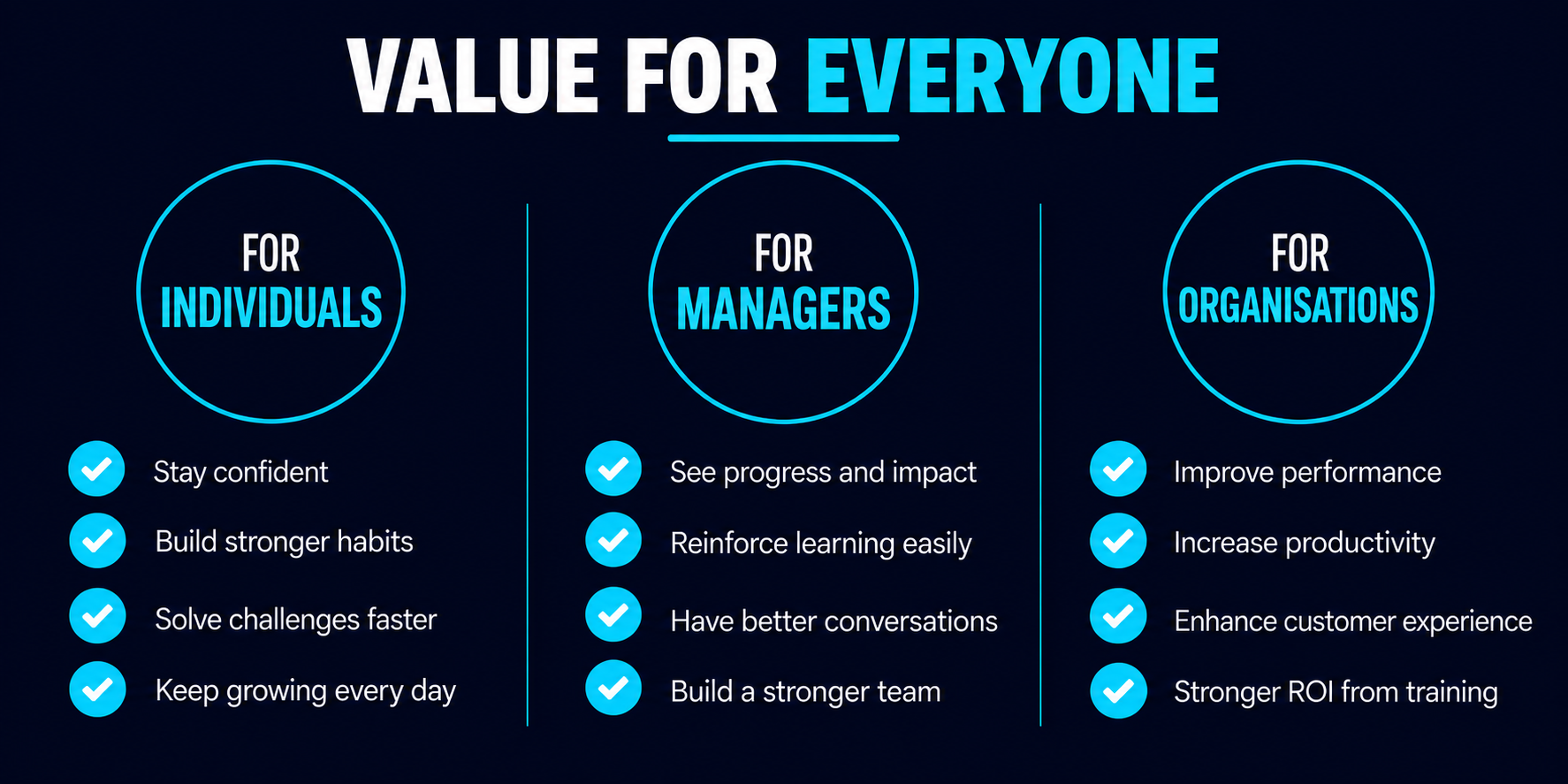
Understand emotions. Manage behaviour. Improve performance.
Think better
Serve better
Communicate better
Perform better

Emotional Intelligence and performance at Work
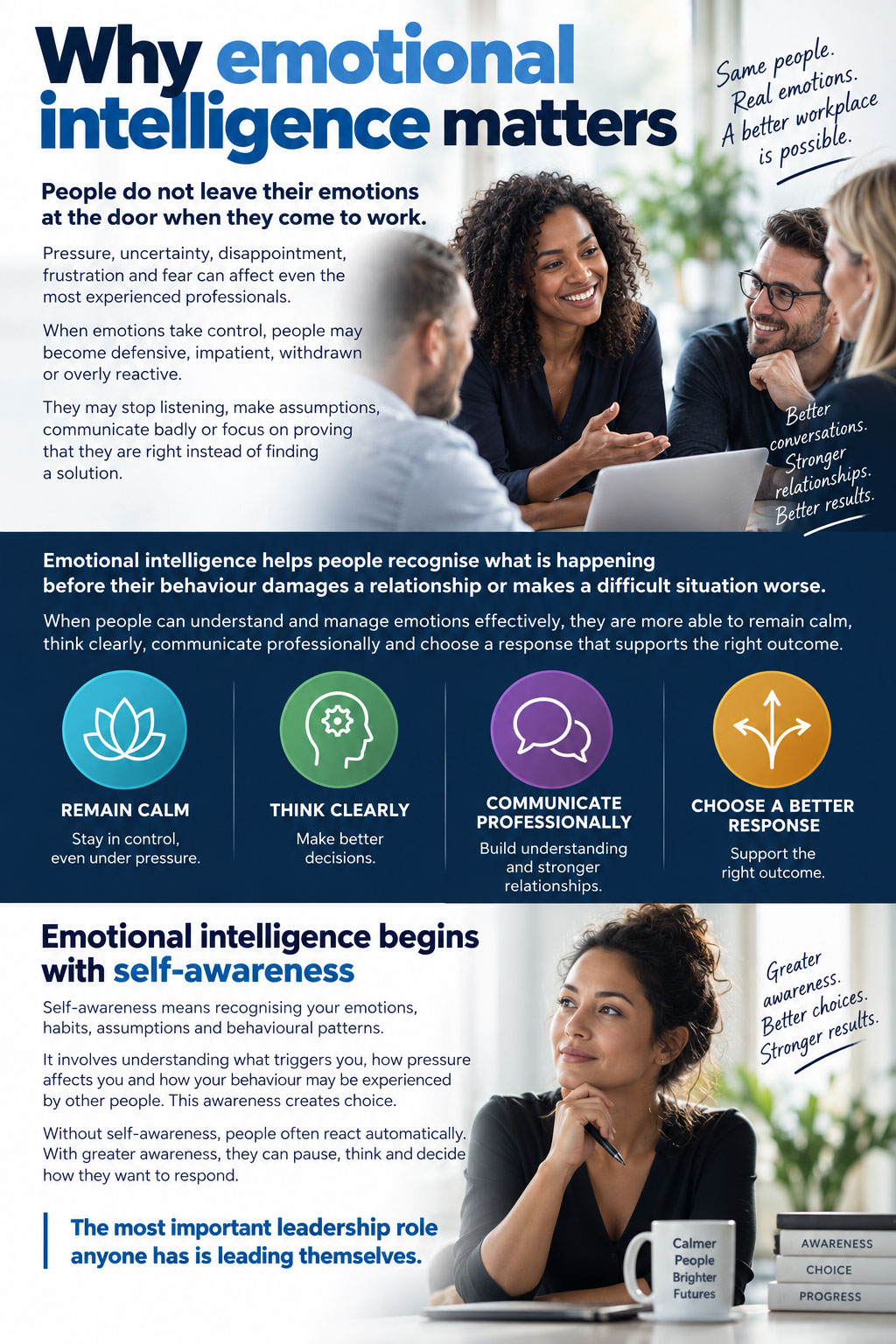
Emotions influence how people think, communicate and behave. They affect the decisions people make, the way they respond to pressure and the quality of their relationships with customers, colleagues and suppliers.
Emotional intelligence is the ability to recognise emotions in yourself and others, understand what those emotions may mean and manage your response constructively.
It is not about suppressing emotions or avoiding difficult situations. It is about developing the self-awareness, judgement and communication skills needed to respond professionally in the moments that matter.
Understanding the emotions of others
Emotional intelligence also means noticing what may be happening for another person.A frustrated customer may feel ignored. A defensive colleague may feel criticised. A project manager under pressure may feel that control is being lost. An engineer who appears resistant may feel uncertain about the expectations being placed upon them.
Understanding another person's emotions does not mean agreeing with everything they say or accepting unacceptable behaviour. It means looking beyond the immediate reaction, listening carefully and trying to understand the needs, concerns and pressures influencing the conversation.
This creates the opportunity to build trust and move towards a constructive solution.
Emotional intelligence under pressure
Under pressure, people rarely rise to their potential. Instead, they often fall back on their memories, habits and established patterns of behaviour, sometimes without even realising it.
Pressure triggers emotion. Emotion shapes behaviour. Behaviour determines results. This is why emotional intelligence is particularly important in customer conversations, project meetings, technical discussions, performance reviews, negotiations and situations involving disagreement or uncertainty.
The ability to stop, think and choose a response can prevent a difficult moment from becoming a costly problem.
The PSL approach
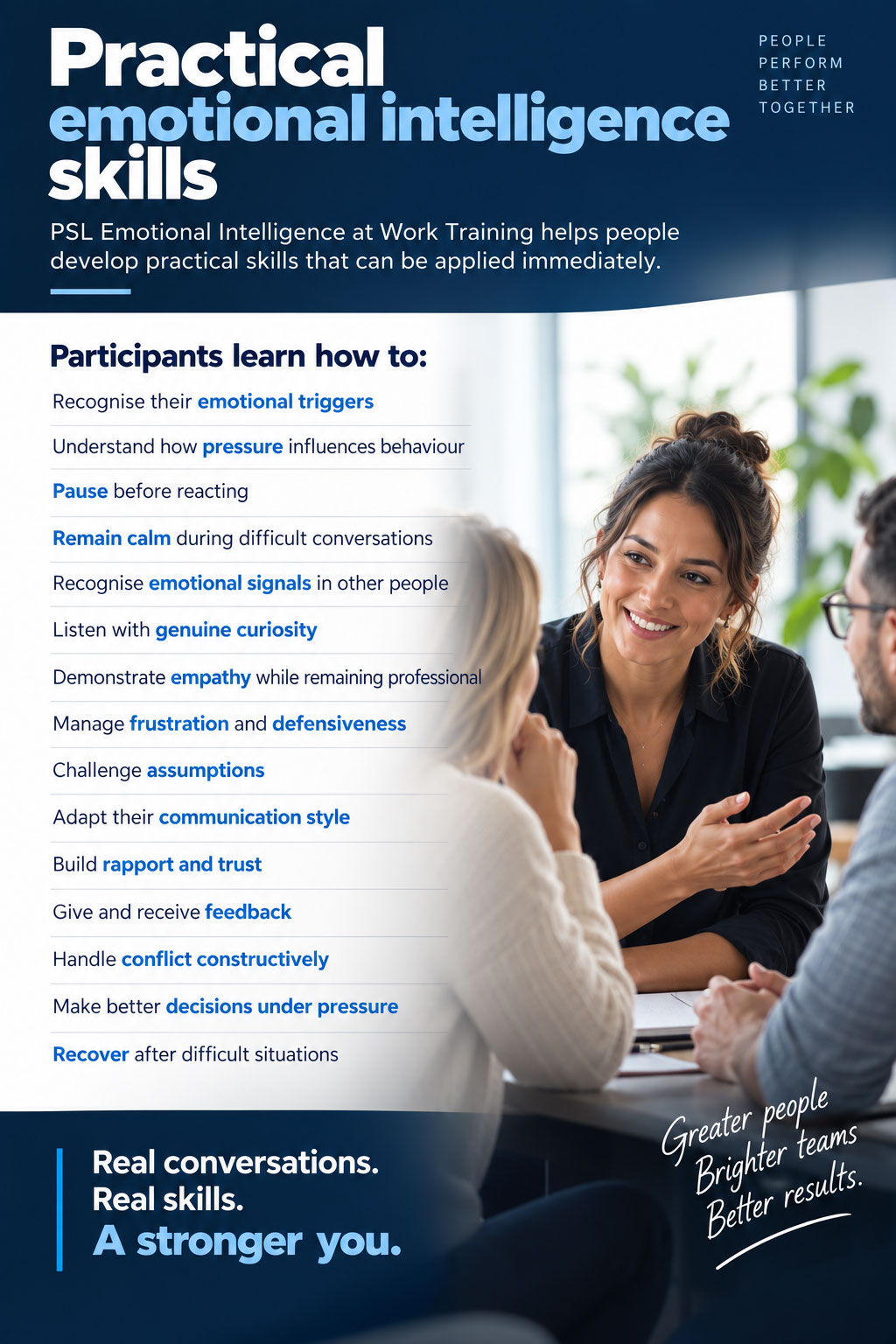
Our training is supported by the PSL Operating System: a practical collection of thinking, communication and performance tools that help people perform more consistently.
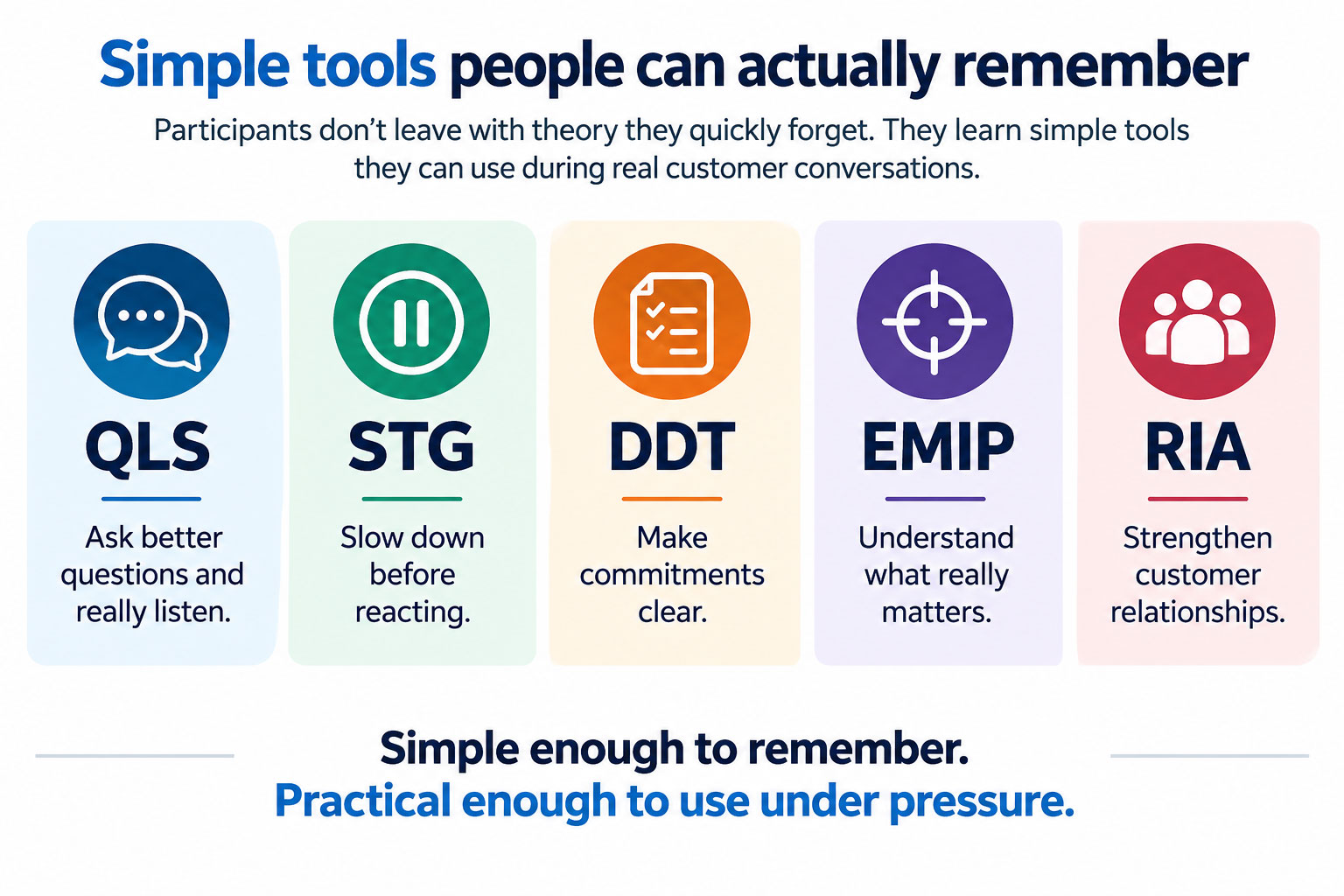
Participants use simple, memorable frameworks including:
- STG – Stop, Think, Go
Pause before reacting, consider the situation and choose a constructive response. - QLS – Question, Listen, Silence
Ask effective questions, listen carefully and create enough space for the other person to think and respond. - UTU – Understand needs, Take ownership, Use problem-solving tactics
Understand what matters, demonstrate responsibility and help move the situation towards a solution. - EMIP – Evidence, Meaning, Impact, Priorities
Separate facts from assumptions and make more balanced decisions. - RIA – Relationship Investment Account
Understand how every interaction can build or reduce trust.
These tools turn emotional intelligence from an abstract idea into practical behaviour.
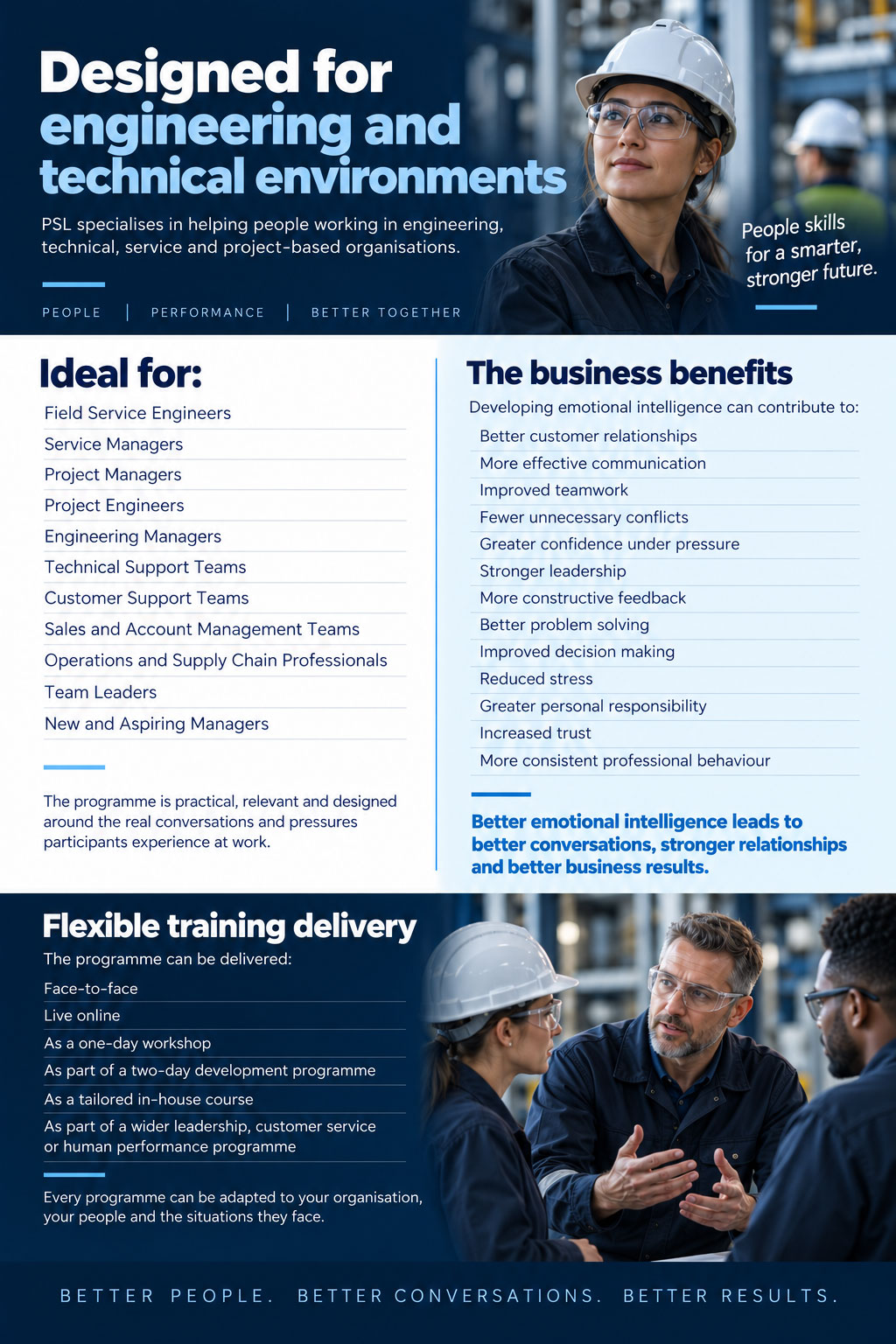
Develop the intelligence that technical ability alone cannot provide
Technical knowledge is essential. But technical knowledge alone does not determine how well someone handles pressure, communicates difficult information, responds to frustration or builds trust with other people.
Emotional intelligence helps people bring the best of their technical knowledge, experience and judgement into the moments that matter.
Speak to us about Emotional Intelligence at Work Training and discover how we can help your people think more clearly, communicate more effectively and perform at their best under pressure.