Soft Skills Training for Project Managers
Be the best you can be as a Project Manager.
Delight your customers
Know your audience
Improve communication skills
Demonstrate value

PSL Soft Skills Training for Project Managers
We provide:
- Workshops that are tailored to meet your needs and the availability of your team.
- Very clear how to resources.
- Tools that fit your business and the situations that your team have to deal with.
- Training that is practical and inspiring.
Be the best you can be as a Project Manager.
Develop the human skills needed to manage people, pressure, expectations and change and protect project performance.
Think Better → Communicate Better → Perform Better → Get Better Results
What follows on this page includes a few insights about project manager soft skills.
- What is it that you want to achieve?
- How can we help you?
- What do we need to do to help you?
By understanding your needs and aspirations we will design the solution that works best for you.
Project Management soft Skills Training
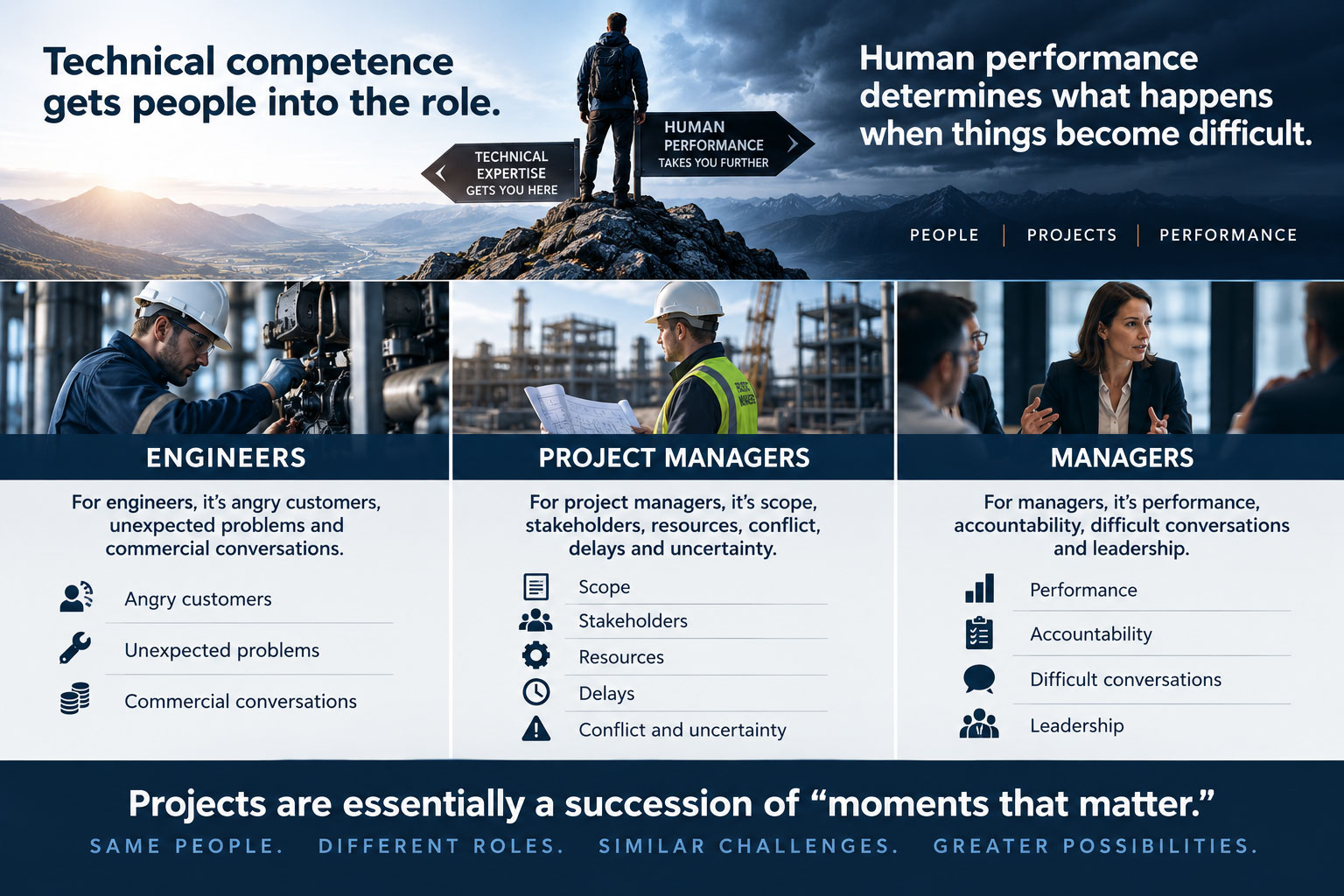
Project managers rarely struggle because they don't understand the project plan, process or project-management system.
Projects become difficult when people, priorities, expectations and circumstances change.
A customer asks for more than was agreed. A supplier misses a deadline. Resources are moved to another project. Costs increase. Information arrives late. Team members disagree. Stakeholders want different outcomes.
In these moments, technical project-management knowledge is essential - but it is rarely enough.
PSL helps project managers develop the human performance skills needed to manage pressure, communicate clearly, solve problems and keep people moving towards a successful outcome.
Projects rarely go exactly to plan.
→ A customer asks for more than was agreed.
→ A supplier misses a deadline.
→ Resources are moved to another project.
→ Costs increase.
→ Information arrives late.
→ A stakeholder changes their expectations.
→ Two departments disagree about responsibility.
→ Someone has to deliver bad news.
The plan tells people what should happen.
Human performance determines what happens when it doesn't.
Project Managers Performing at Their Best
→ Manage expectations and scope
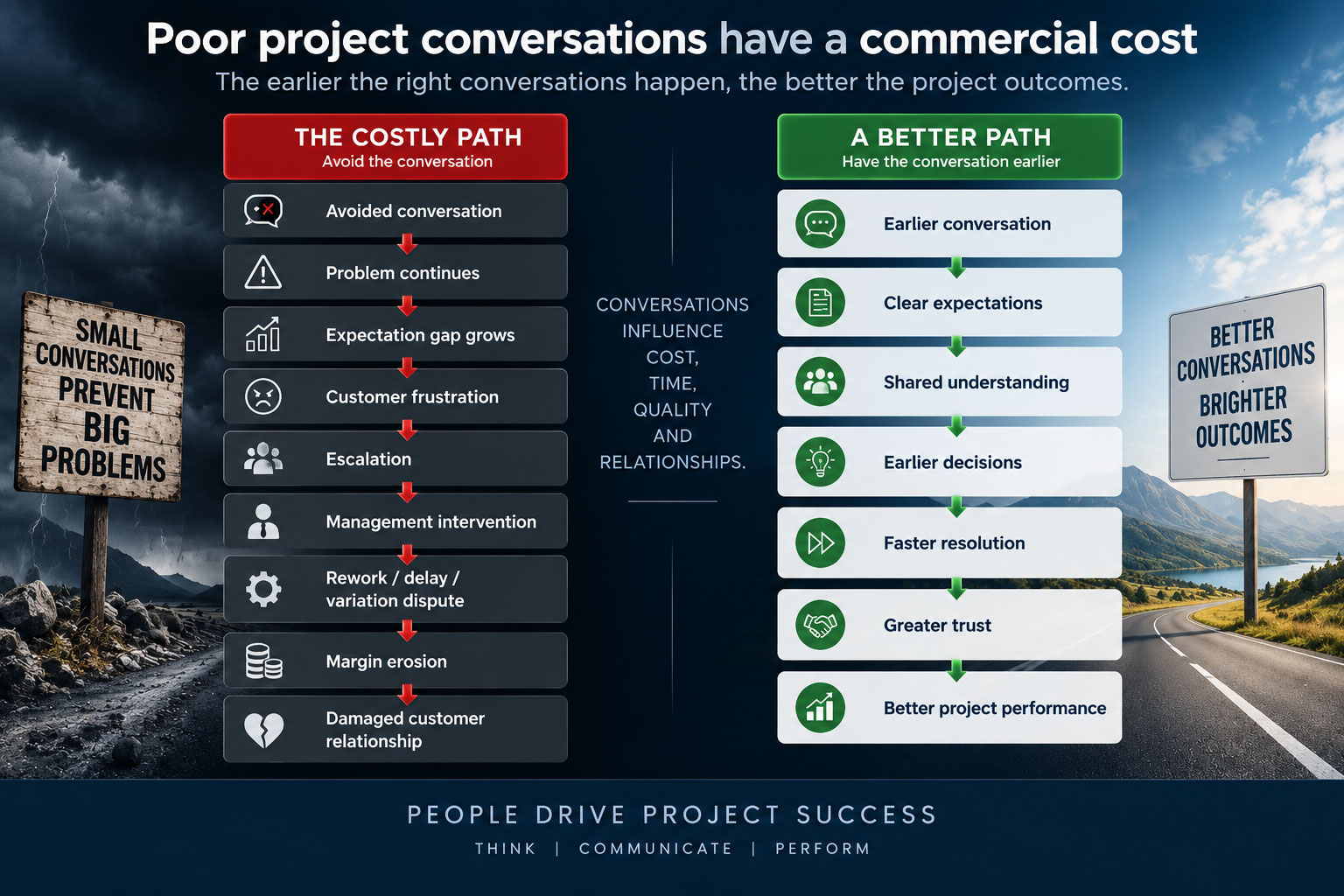
→ Have difficult conversations
→ Influence people and resources
→ Manage conflict and pressure
→ Communicate commercially difficult information
→ Thinking better and leading under pressure
Managing expectations and scope
Clarifying responsibilities, deliverables, risks and dependencies. Recognising scope creep and protecting the project without damaging the relationship.
Having difficult conversations
Addressing missed commitments, poor performance, unrealistic expectations, delays and emerging risks before they become bigger problems.
Influencing people and resources
Building cooperation across customers, suppliers and internal departments - particularly where the project manager has responsibility without direct authority.
Managing conflict and pressure
Remaining constructive when people become frustrated, defensive or emotional and move conversations from blame towards resolution.
Communicating commercially difficult information
Handling delays, increased costs, variations and bad news clearly while protecting trust and commercial value.
Thinking better and leading under pressure
Preventing reactive decisions, separating evidence from assumptions and creating confidence when the project becomes uncertain.
The objective is not to turn project managers into scripted communicators.
It is to give them practical insights, skills and tools that help them perform as confident, capable and authentic individuals.
Tell us what's happening.
There may be a particular project, customer situation or recurring challenge your project managers need to handle better.
Tell us about it.
We'll explore what's happening, what better performance would look like and whether PSL can help.
If we can help, we'll tell you. If we can't, we'll tell you that too.